An environmental sample may be collected today but analysed days, weeks, or months later. During that time, temperature changes, chemical reactions, microbial activity, and contamination can alter its composition. If these changes go unnoticed, even a technically sound laboratory analysis may produce results that no longer represent the original sample.
Environmental sample storage and long-term preservation help laboratories maintain sample integrity, manage analytical deadlines, and keep samples traceable throughout their lifecycle. Getting it right requires more than choosing a refrigerator or freezer. Laboratories must understand the material being tested, select appropriate preservation conditions, and establish how long the sample remains suitable for analysis.
What Is Environmental Sample Storage?
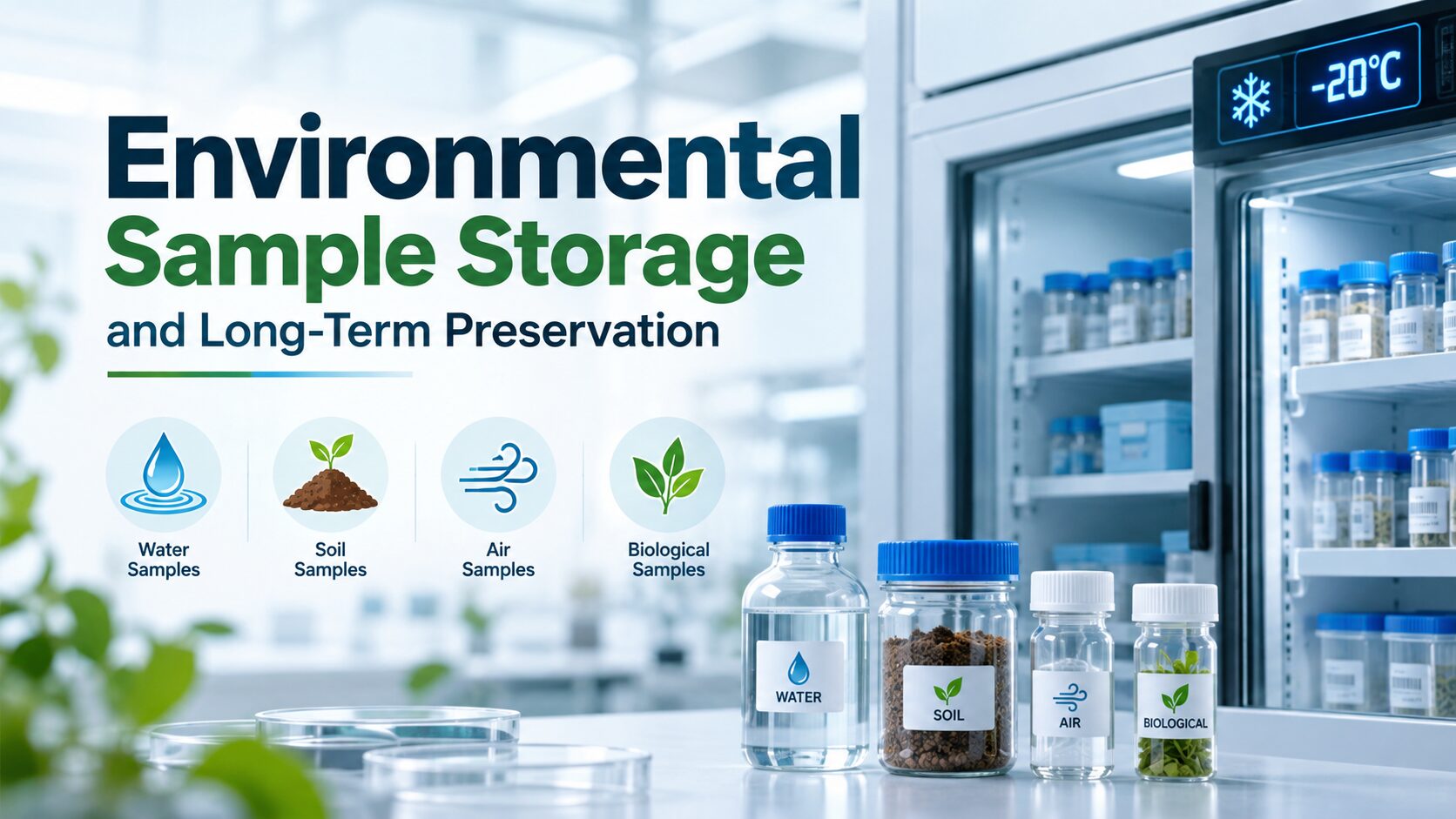
Environmental sample storage is the process of keeping collected materials under appropriate conditions before analysis or during an approved retention period. Common samples include surface water, groundwater, wastewater, soil, sediment, and air filters.
Storage requirements depend on the sample matrix and the substances being measured. A water sample intended for dissolved metals analysis, for example, may require different treatment from one collected for microbiological testing. Soil samples intended for volatile organic compound (VOC) analysis may need specialised containers and handling to minimise analyte loss.
The objective is to preserve the sample’s suitability for its intended analysis, not simply to keep it physically intact.
Why Is Long-Term Sample Preservation Important?
Environmental samples can change after collection. Oxidation, evaporation, microbial activity, and interactions with container materials may affect the properties being measured.
Proper preservation helps laboratories:
- Maintain sample integrity and reduce changes that could affect analytical results.
- Retain suitable samples for additional testing or future investigations.
- Maintain traceability through documented storage and handling records.
- Meet applicable analytical, project, and regulatory requirements.
- Identify samples that are no longer suitable for their intended analysis.
Long-term preservation does not guarantee indefinite stability. A sample can appear unchanged while its chemical composition or biological characteristics have shifted.
Common Environmental Sample Preservation Methods
The appropriate method depends on the sample matrix, target analytes, analytical procedure, and intended storage duration.
1. Refrigeration and Cold Storage
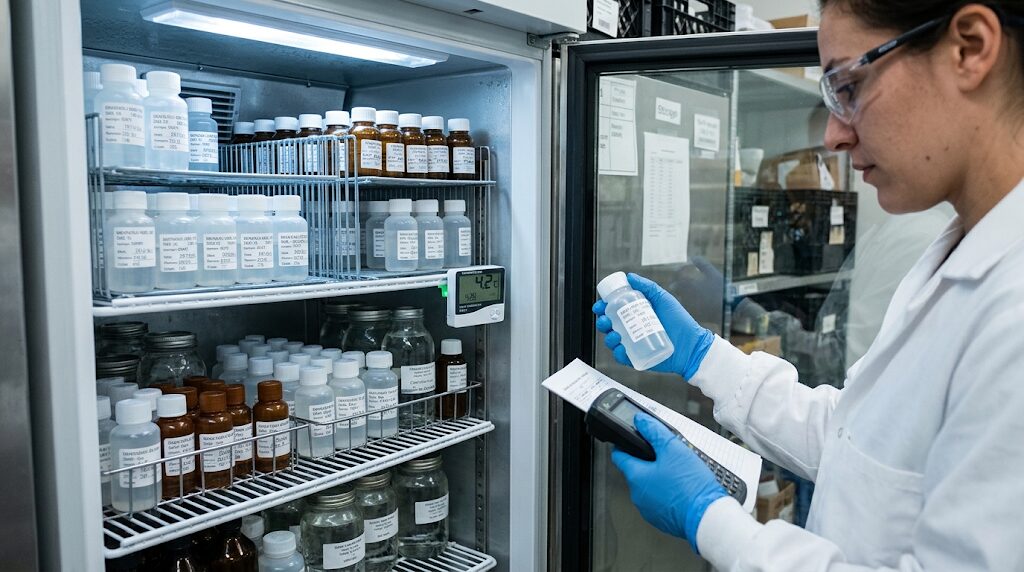
Refrigeration slows certain chemical and biological processes and is commonly required for selected environmental samples. Some analytical methods specify storage at approximately 4°C, but the precise conditions depend on the test.
Cold storage alone cannot prevent every change. Laboratories must also consider container compatibility, contamination risks, chemical preservation, and analytical holding times.
The US Geological Survey’s National Field Manual for the Collection of Water-Quality Data provides established procedures for collecting, processing, and handling water-quality samples.
2. Freezing and Low-Temperature Storage
Freezing may be suitable for selected environmental or biological samples when the intended analysis permits it. The appropriate temperature and storage duration depend on the material and analytical method.
Freezing can change sample structure, cause precipitation, or affect the availability of particular substances. Repeated freeze-thaw cycles may also compromise certain samples.
Before adopting freezing for extended storage, laboratories should establish that the method preserves the properties required for subsequent analysis.
3. Chemical Preservation
Some samples require specific chemical preservatives to stabilise target analytes or control biological activity. Depending on the method, this may involve adjusting pH or adding an approved reagent.
An unsuitable preservative can interfere with measurements or introduce contamination. Staff should follow the applicable analytical procedure and document the treatment.
The US EPA’s holding-time and preservation guidance explains how preservation requirements and holding times vary by analytical method, sample matrix, and target substances.
4. Protection From Light, Air, and Contamination
Certain substances are sensitive to light, oxygen, moisture, or incompatible container materials. These samples may require light-protective containers, suitable seals, specialised packaging, or controlled handling environments.
Clean equipment and appropriate containers also help prevent cross-contamination. These precautions should begin during collection because storage cannot reverse contamination or analyte loss that has already occurred.
How Long Can Environmental Samples Be Stored?
There is no universal storage duration for environmental samples. The permitted holding time depends on the sample matrix, target analytes, preservation conditions, and applicable analytical method.
Two terms are important:
- Analytical holding time: The permitted period before a specified analytical step must be completed.
- Retention period: The period for which a laboratory keeps a sample for research, operational, contractual, or other approved purposes.
These terms are not interchangeable. A sample might be retained after its routine analytical holding time has expired without necessarily remaining suitable for further testing.
For example, volatile compounds may be lost if samples are not collected and preserved correctly, while other analytes may remain stable for longer under specified conditions.
Laboratories should consult the applicable analytical method, project quality plan, and regulatory requirements before assigning holding times. EPA’s SW-846 guidance applies to relevant hazardous-waste testing methods; it should not be treated as a universal schedule for every environmental sample.
Where samples are retained for months or years, their suitability for future analysis should be supported by appropriate technical evidence rather than assumed from storage temperature alone.
How to Manage Long-Term Environmental Sample Storage
Preservation protects sample integrity, but effective storage management ensures that samples remain identifiable, accessible, and properly documented.
- Establish storage requirements. Identify the sample type, intended analysis, preservation method, required conditions, and retention period before storage.
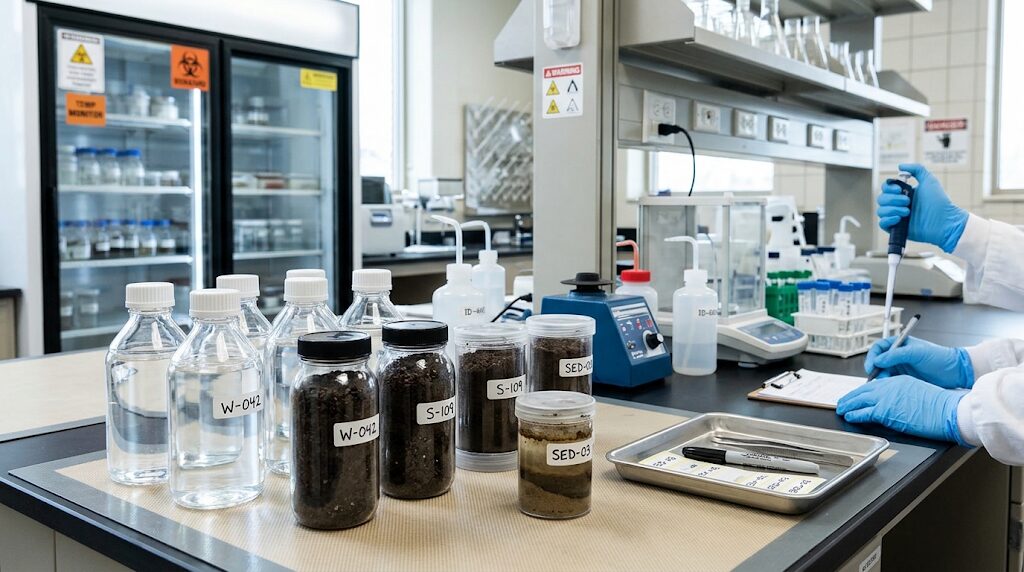
- Label and register every sample. Assign a unique sample ID and record collection details, preservation treatment, applicable holding time, and storage location.
- Monitor storage conditions. Use suitable monitoring procedures for temperature-controlled storage. Define how staff should respond to equipment failures or conditions outside specified limits.
- Track sample movements. Record transfers, retrievals, subdivisions, and other relevant handling events.
- Review deadlines and retention requirements. Identify samples approaching analytical deadlines or the end of their approved retention periods.
- Document disposal. Establish when samples can be discarded and record their final disposition in accordance with applicable requirements.
Accurate records are essential throughout this process. Consistent laboratory sample documentation and record-keeping helps connect sample identification, storage details, handling history, and final disposition.
How a LIMS Supports Environmental Sample Storage
When a laboratory manages hundreds or thousands of samples, keeping storage locations, preservation records, and retention deadlines up to date can become difficult. Information scattered across spreadsheets and paper logs also makes sample retrieval slower.
A Laboratory Information Management System (LIMS) can centralise sample records and help staff maintain visibility throughout the sample lifecycle.
Depending on its capabilities and configuration, a LIMS can support:
- Storage location tracking: Record where samples are stored and help staff retrieve them.
- Preservation documentation: Maintain records of applicable storage requirements and handling.
- Holding-time monitoring: Use configured reminders to help staff manage upcoming analytical deadlines.
- Sample movement history: Record transfers, retrievals, and other relevant activities.
- Reporting and traceability: Retrieve sample information for investigations and quality reviews.
For laboratories seeking a more organised way to manage these workflows, sample management software can help connect sample information and tracking records.
Storage management also involves the materials and resources used by the laboratory. Organised laboratory inventory management helps maintain visibility into laboratory inventory information.
A LIMS complements established preservation procedures; it does not replace suitable storage equipment, validated analytical methods, or technical assessments of sample stability.
Protect Sample Integrity From Collection to Retention
Reliable environmental sample storage depends on selecting the right preservation method, following applicable holding times, monitoring storage conditions, and maintaining accurate records.
For long-term studies, sample stability must be established rather than assumed. When laboratories combine sound preservation procedures with traceable sample management, they can retrieve retained samples more confidently and maintain a clearer history of their handling.
If your laboratory wants to improve sample tracking and visibility across its workflows, request a QISS LAB demo to see how a LIMS can support laboratory operations.
Related Articles
- Managing Chain-of-Custody in Field Sampling with Environmental LIMS
- Documentation and Record-Keeping Best Practices for Lab Samples
- Optimizing Sample Intake, Processing, and Disposal Workflows
- How Can Lab Software Help in Sample Retention Process?
- Preparing Labs for Audits with Traceable Sample Tracking