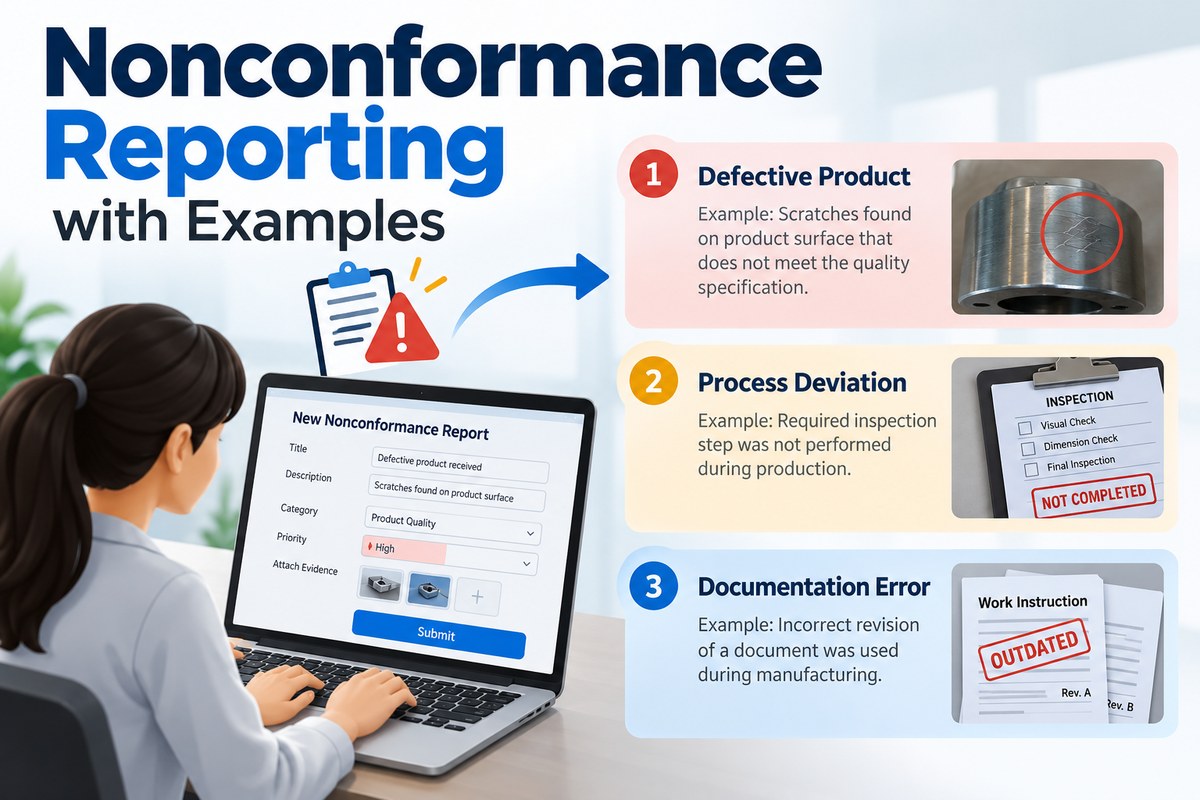
A defective product is bad. Discovering that nobody documented the defect, nobody owns the corrective action, and the same problem happened last month? That’s a quality management problem.
Nonconformance reporting helps organizations document failures, investigate their causes, and prevent recurring issues. In manufacturing, these failures can lead to rework, scrap, customer complaints, and higher costs. The American Society for Quality (ASQ) explains how the cost of poor quality includes costs associated with failures discovered both before and after delivery.
What Is a Nonconformance Report?
A nonconformance report (NCR) formally documents a failure to meet a specified requirement, whether it comes from an ISO standard, customer specification, engineering drawing, or internal procedure.
For example, a manufacturer produces components that must measure between 9.8 mm and 10.2 mm. An inspection finds several measuring 10.4 mm. The components fail the specification, so the issue is recorded in an NCR.
Nonconformances can also involve missed inspections, outdated work instructions, incomplete quality records, or materials that fail supplier specifications. Knowing when to issue an NCR and how to resolve it helps teams determine when an issue needs formal documentation and follow-up.
What Should a Nonconformance Report Include?
A well-prepared NCR should contain enough information to investigate the issue and track its resolution.
- Report details: NCR number, date, department, and reporting person.
- Description and evidence: What happened, where it occurred, and supporting measurements, photographs, or records.
- Applicable requirement: The specification, procedure, customer requirement, or standard that was not met.
- Correction and containment: Immediate steps to address the problem and control affected products or processes.
- Root cause: The underlying reason the nonconformance occurred.
- Corrective actions: Measures to address the cause, with assigned responsibilities and deadlines.
- Verification and closure: Evidence that actions were completed and their effectiveness evaluated.
Correction and corrective action aren’t the same thing. Replacing a defective component fixes the immediate problem. Changing the process to prevent the defect from recurring addresses its cause.
Otherwise, you’re just replacing the same component on repeat.
Common Nonconformance Examples
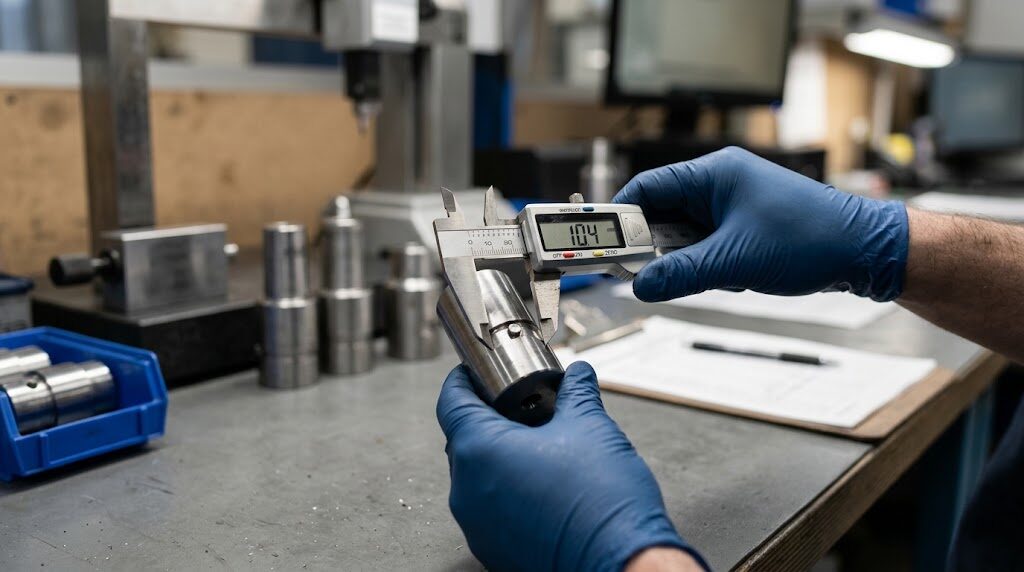
- Product defects
Components fail final inspection because their measurements fall outside the approved tolerance.
Response: Segregate affected products, determine their disposition, and investigate why the process failed to meet specifications.
- Missed inspections
An operator skips a mandatory production inspection, but manufacturing continues.
Response: Assess potentially affected products, perform necessary verification, and investigate why the inspection was missed.
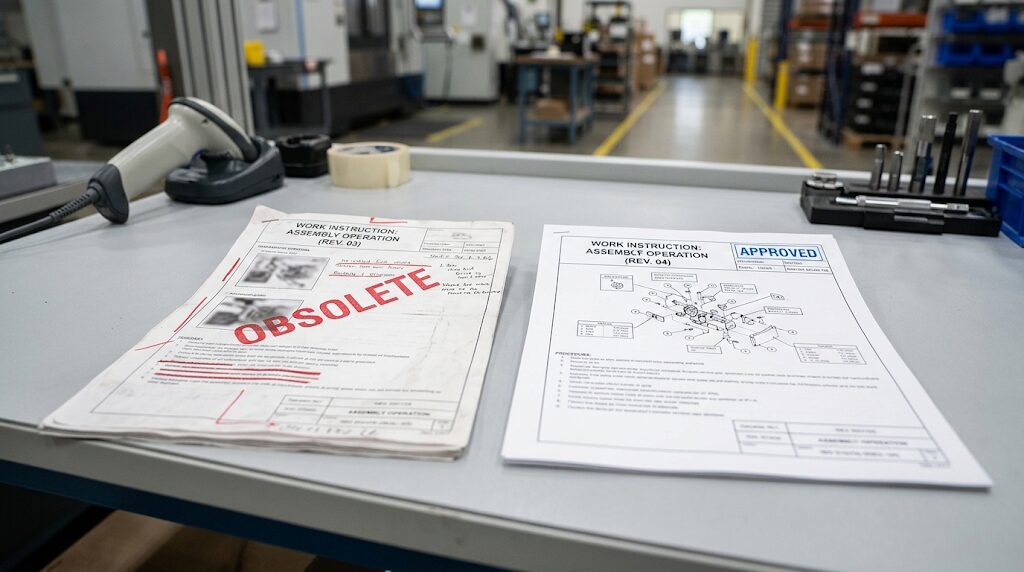
- Uncontrolled documents
Employees continue using an outdated work instruction after a revised version has been approved.
Response: Ensure employees have the correct version, assess any impact on product quality, and address the document control failure.
These issues can stem from human error, inadequate equipment maintenance, poor process control, or insufficient inspection. Understanding the common causes of non-conformance in the manufacturing sector can help teams investigate beyond the immediate defect.
ISO 9001 Nonconformance Examples
ISO 9001:2015 establishes requirements for quality management systems. The following examples illustrate how failures to meet applicable requirements can become nonconformances.
| ISO 9001 clause | Example |
| 7.5 – Documented information | Employees use an obsolete work instruction instead of the approved version. |
| 8.6 – Release of products and services | Products are shipped before required inspection and release approval. |
| 8.7 – Control of nonconforming outputs | Defective products return to production without the required disposition or authorization. |
| 10.2 – Nonconformity and corrective action | A recurring problem is repeatedly corrected without adequately evaluating its cause or the need for corrective action. |
These are illustrative examples, not automatic audit findings. An actual ISO nonconformance requires evidence that a specific applicable requirement was not met.
Example of a Completed Nonconformance Report
Consider a manufacturer that discovers dimensional defects during final inspection.
NCR number: NCR-2026-014
Issue: Eighteen out of 100 machined components measure 10.4 mm, exceeding the upper specification limit of 10.2 mm.
Requirement: The approved drawing specifies a diameter of 10.0 ± 0.2 mm.
Immediate containment: The affected components are segregated, and the remaining batch is placed on hold pending inspection.
Root cause: The investigation identifies tool wear and failure to follow the required tool inspection frequency.
Corrective action: Review the inspection frequency, revise controls where necessary, assign responsibility, and train affected operators.
Effectiveness verification: Review subsequent inspection results and confirm that the revised controls are followed.
Closure: Close the report after required actions are completed, effectiveness is verified, and necessary approvals are obtained.
The root cause in a real NCR must be supported by investigation evidence, not assumed from the initial defect.
How to Manage Nonconformance Reports Effectively
Documenting a problem is useful. Leaving it unresolved while the same issue continues is considerably less so. A structured nonconformance management process helps teams move from identifying an issue to investigating its cause, assigning corrective actions, and verifying that those actions work.
An effective process follows five steps:
- Identify and contain: Record the issue and control affected products or processes.
- Investigate: Determine the underlying cause using appropriate evidence and analysis.
- Assign corrective actions: Define what must change, who is responsible, and when it is due.
- Verify effectiveness: Check whether the actions addressed the cause and helped prevent recurrence.
- Close and monitor: Confirm closure requirements are met and review trends for recurring problems.
The response should match the risk. A minor documentation error doesn’t necessarily need the same investigation as a recurring defect affecting customers.
How Software Supports Nonconformance Reporting
Spreadsheets and email can work for a small number of NCRs. As reports and corrective actions accumulate, keeping track of owners, deadlines, evidence, and recurring issues becomes harder.
QMS software like QISS QMS supports quality management processes such as document control, audit management, CAPA, and nonconformance management. It helps teams bring these activities into a more structured system instead of relying on scattered spreadsheets and email threads.
If your team is spending more time chasing NCR updates than resolving quality issues, request a free QISS QMS demo to see how the platform could support your quality processes.