A sample can be collected perfectly, tested correctly, and still become a compliance problem because someone stored it incorrectly or disposed of it too early. Not exactly a quality management success story.
In a PubMed study published in Laboratory Medicine, researchers reviewed more than 3.3 million specimen labels across 147 clinical laboratories, identifying 0.92 labeling errors per 1,000 labels. The study also found that laboratories with ongoing identification quality monitoring had lower error rates.
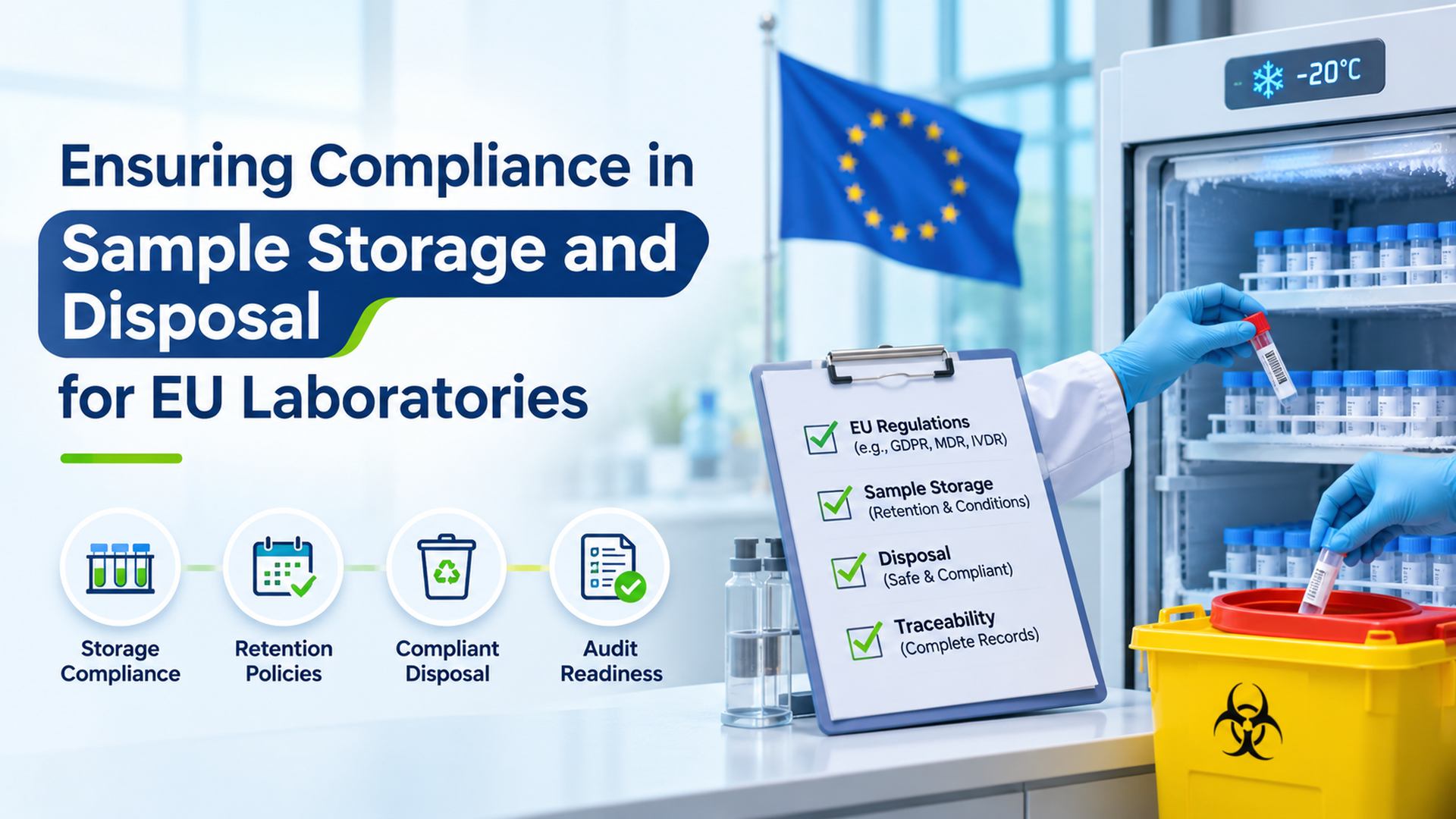
For European laboratories, identification is only one piece of the puzzle. Storage conditions, retention periods, hazardous waste handling, and disposal records all need appropriate controls. Here’s how to manage them without turning every sample into a paperwork marathon.
Which Regulations Apply to European Laboratories?
There is no single EU-wide retention period or disposal procedure that applies to every laboratory sample. Requirements depend on the sample type, laboratory sector, applicable national legislation, and relevant standards.
Three areas deserve particular attention:
- EU waste legislation: The EU’s Waste Framework Directive establishes the legal framework for waste management and introduces stricter controls for hazardous waste, including applicable labelling, recordkeeping, monitoring, and traceability obligations.
- ISO/IEC 17025: Laboratories working under this standard need appropriate procedures for handling, storing, retaining, and disposing of test items in accordance with applicable requirements.
- National and sector-specific rules: Medical, environmental, chemical, food-testing, and pharmaceutical laboratories may face additional obligations. Personal data associated with samples may also fall under the General Data Protection Regulation (GDPR).
UK laboratories should check the relevant UK legislation separately rather than assume EU rules apply identically.
The practical starting point is to identify the requirements relevant to your laboratory and translate them into documented procedures. A generic checklist cannot replace checking the actual rules that apply to your samples.
How to Store and Retain Samples Compliantly
A sample’s storage requirements depend on its composition, intended analysis, and applicable method. A water sample awaiting chemical analysis does not necessarily need the same conditions as a biological specimen.
Start with four controls.
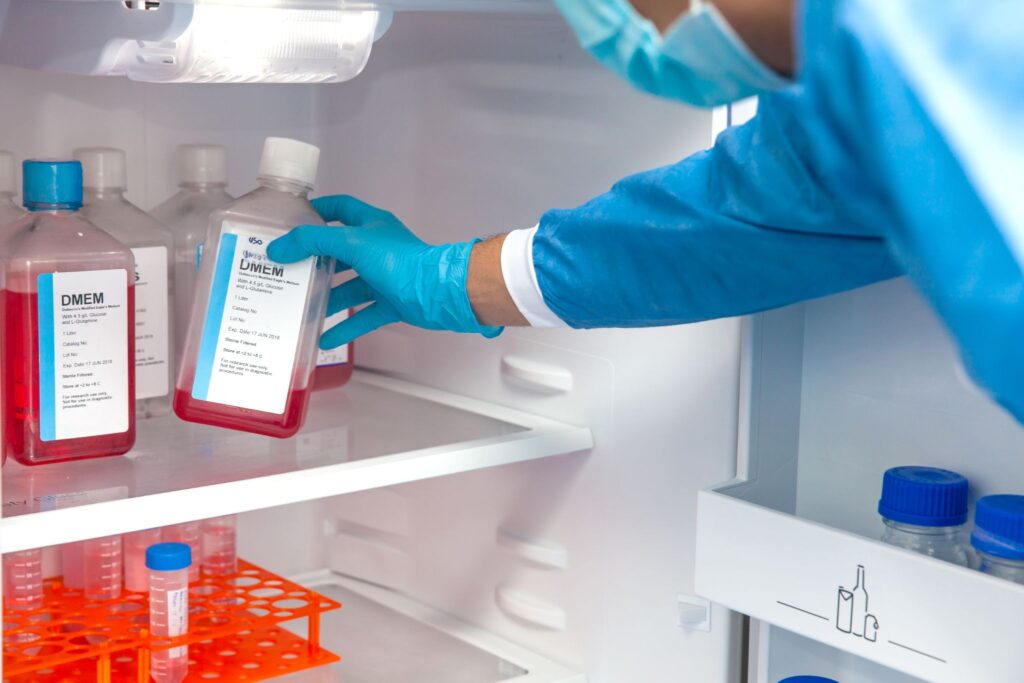
Maintain appropriate storage conditions. Define temperature ranges, light exposure, humidity, containment, and other relevant parameters according to the applicable method or specification. Use monitoring equipment and alarms where required, and document excursions and corrective actions.
Make every sample traceable. Assign a unique identifier and record the sample’s source, receipt date, storage location, handling history, and relevant status. Labels should remain legible, and movements between locations should be documented.
Set retention periods. Establish how long each sample must be retained, considering applicable legislation, testing methods, customer contracts, and internal procedures. Review approaching deadlines regularly.
Prepare for equipment failures. Power outages and refrigerator failures rarely arrive at convenient times. Establish procedures for protecting or transferring affected samples, assessing their suitability for continued use, and documenting deviations.
Consistent handling procedures also matter. Training staff to verify labels, follow storage instructions, and report discrepancies helps prevent small mistakes from becoming larger quality problems. These controls are particularly useful when several people handle the same sample throughout its lifecycle.
How to Dispose of Laboratory Samples Correctly
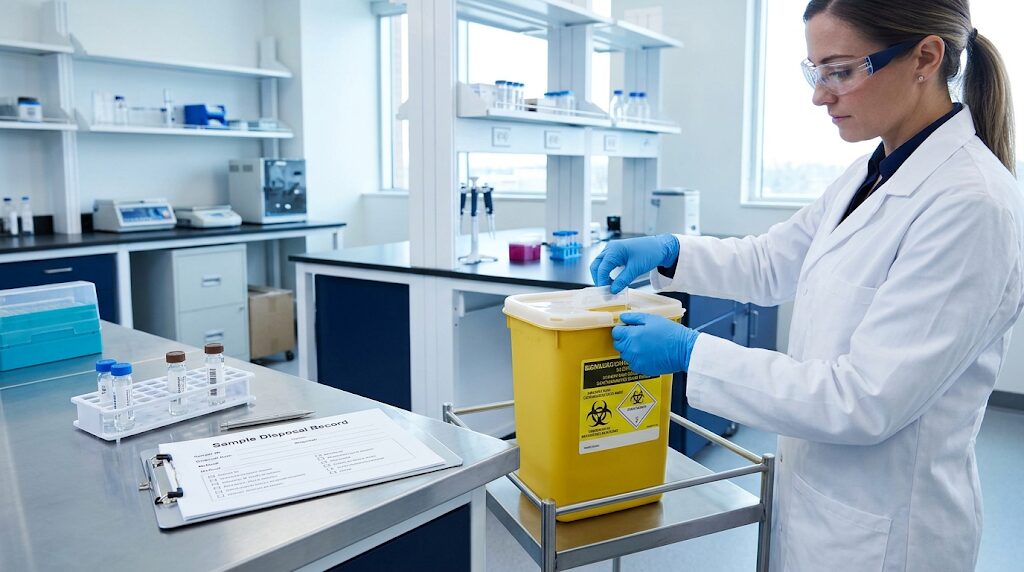
Disposal is not simply a matter of clearing space in the refrigerator before the next batch arrives.
First, determine whether a sample has reached the end of its authorised retention period. Check whether legal requirements, customer agreements, ongoing investigations, or other obligations require it to be retained longer.
Next, classify the material correctly. Depending on its composition and origin, laboratory waste may require segregation, specialised packaging, hazard labelling, or disposal through an appropriately authorised facility.
Hazardous waste requires particular attention. EU waste legislation establishes additional controls over its handling and traceability, while national rules may impose further requirements for collection, transport, and treatment.
Finally, document the disposal. Depending on the applicable requirements, records may need to identify the waste’s nature, quantity, origin, destination, collection arrangements, and treatment method. Internal sample records should also establish which sample was disposed of, when it happened, and who was responsible where required.
A sample disappearing from a storage register is not the same as a documented, authorised disposal. The record should demonstrate what happened and whether the procedure was followed.
Make Sample Compliance Easier With Digital Tracking
Spreadsheets can work for small sample volumes. But as samples, storage locations, and retention deadlines multiply, maintaining consistent records becomes more difficult.
A laboratory information management system (LIMS) can help centralise sample information and reduce reliance on scattered spreadsheets and manual reminders.
Depending on its capabilities and configuration, laboratory software can help teams:
- Track sample identifiers, storage locations, and movements.
- Maintain digital records of sample handling and status changes.
- Flag approaching retention deadlines for review.
- Organise relevant storage and monitoring records.
- Retrieve sample histories more easily during audits.
If you’re looking to improve your lab’s visibility across its sample lifecycle, laboratory sample management software can help organise sample-related information and support more consistent tracking.
QISS LAB is a Laboratory Information Management System (LIMS) designed to support laboratory workflows and digital recordkeeping. By connecting relevant information in a more organised system, laboratories can reduce administrative friction and improve visibility into sample-related activities.
Software does not automatically guarantee compliance. Procedures must still reflect applicable requirements, staff must follow them, and necessary monitoring, approvals, and records must be maintained.
From Storage Shelves to Audit-Ready Records
Compliant sample management comes down to three essentials: appropriate storage, clearly defined retention and disposal procedures, and reliable records.
European laboratories should verify the requirements applicable to their country, sector, and sample types rather than rely on a generic checklist. Regular reviews can help identify overdue samples, missing documentation, and weaknesses before they become larger problems.
For a practical next step, preparing laboratories for audits with traceable sample tracking offers further guidance on maintaining a clear history of sample handling, storage, and movement.
If your laboratory wants to improve sample traceability and organise its digital records, request a QISS LAB demo to explore how a LIMS could support your workflows.