One loose machine guard. One missed safety check. One employee who was never properly trained. Workplace accidents rarely come with a convenient warning.
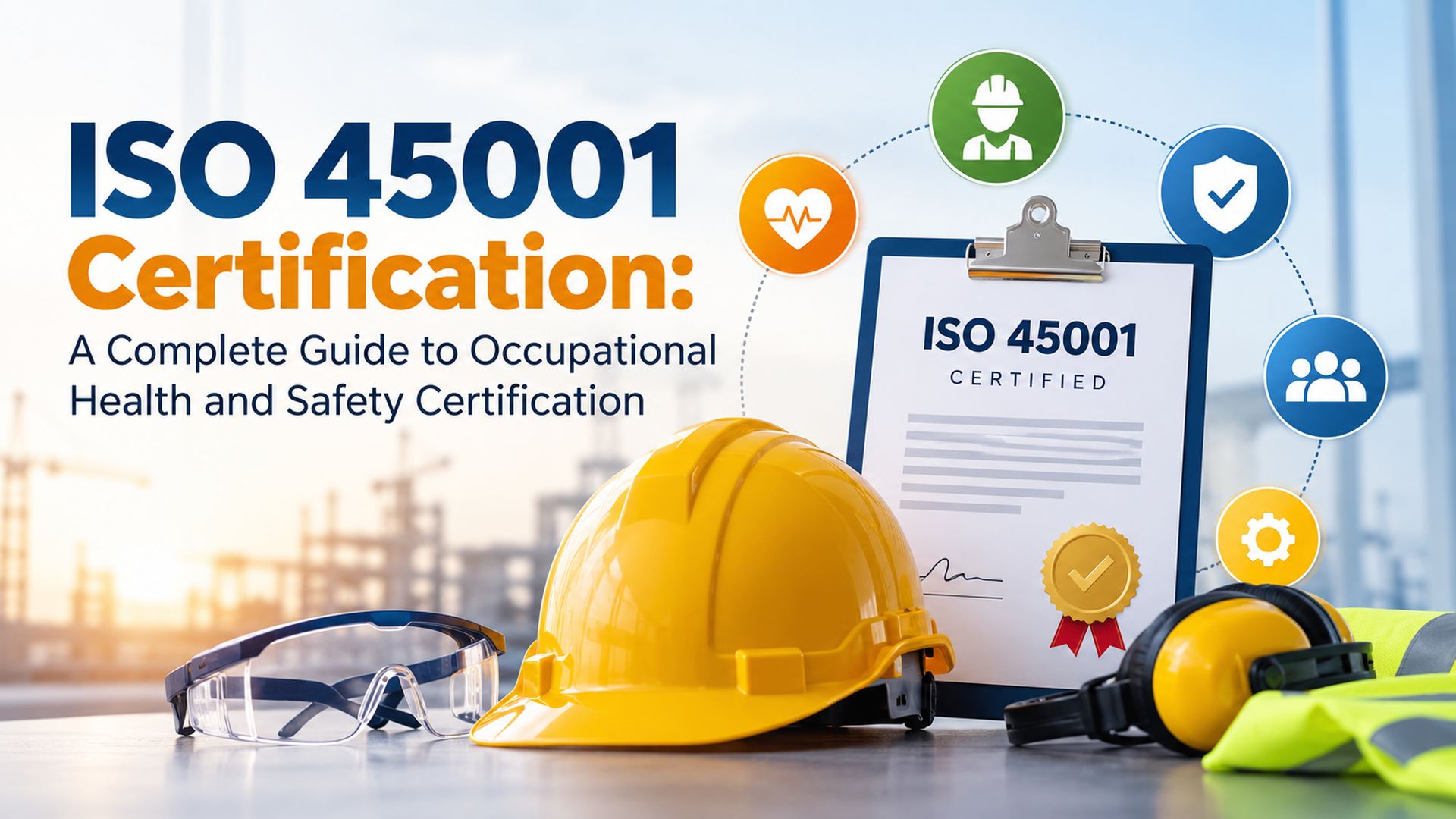
ISO 45001 certification helps organizations identify hazards, control risks, and prevent work-related injuries before something goes wrong. The goal is to make safety part of everyday work, not just a priority after an incident.
This guide covers ISO 45001, its requirements, certification process, audit preparation, and how to maintain an effective Occupational Health and Safety Management System (OH&S MS).
What Is ISO 45001 Certification?
ISO 45001 is an international standard for occupational health and safety management. It provides a framework for identifying workplace hazards, assessing risks, establishing safety controls, and improving performance.
It applies to organizations of all sizes and industries, from factories and construction sites to laboratories and offices.
Certification means an independent certification body has assessed an organization’s OH&S management system and confirmed that it meets the standard’s requirements within the defined scope. ISO itself does not issue certificates.
The current published edition is ISO 45001:2018, including its 2024 climate action amendment. A revised edition is under development.
Why Is ISO 45001 Certification Important?
Workplace safety involves more than protective equipment and warning signs. Organizations need reliable processes to identify risks, train employees, and address problems before they cause harm.
ISO 45001 certification can help organizations:
- Prevent workplace injuries: Identify hazards and implement appropriate controls.
- Improve employee participation: Encourage workers to report hazards and contribute to safety decisions.
- Standardize procedures: Establish consistent safety practices across teams and sites.
- Manage legal requirements: Identify applicable obligations and evaluate compliance.
- Reduce disruption: Address recurring problems that can lead to injuries and downtime.
- Build stakeholder confidence: Demonstrate that the management system has undergone independent assessment.
Certification does not guarantee zero accidents or automatically ensure compliance with every applicable law. Its effectiveness depends on how well the system works in practice.
What Are the Main ISO 45001 Requirements?
ISO 45001’s requirements are organized into Clauses 4–10, covering how organizations plan, operate, evaluate, and improve their safety management systems.
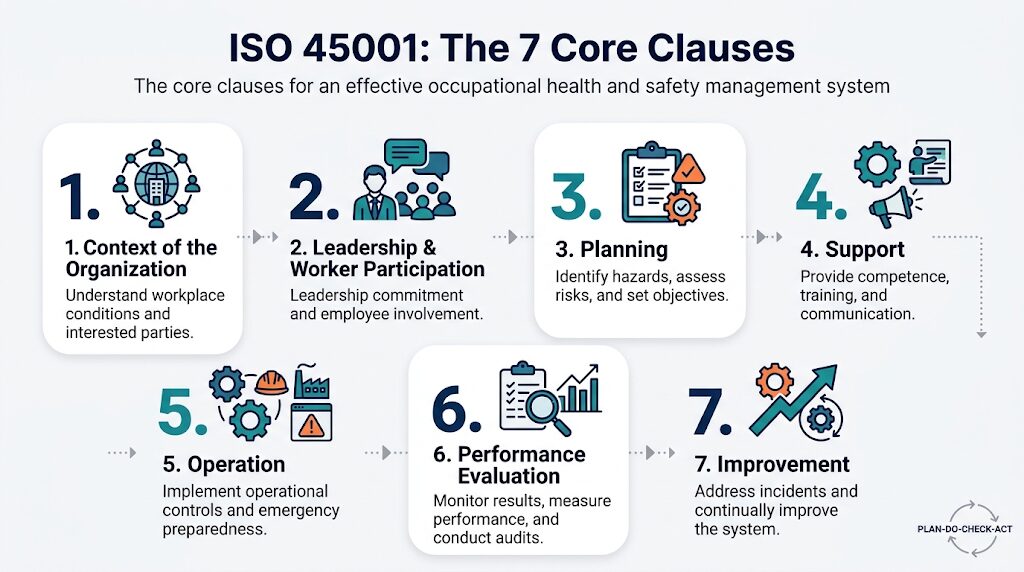
- Organizational context (Clause 4)
Understand the organization’s activities, workforce, working conditions, and relevant legal requirements. Define which operations and locations the management system covers.
- Leadership and worker participation (Clause 5)
Management must establish a safety policy, assign responsibilities, and provide resources. Workers must also be consulted and involved in relevant safety decisions. Employees often spot practical hazards that management may overlook.
- Planning and risk assessment (Clause 6)
Identify workplace hazards, assess risks, and determine appropriate controls. For example, a factory may address machinery hazards through guarding, inspections, and maintenance rather than relying on warning signs alone.
A structured workplace risk assessment helps organizations determine which hazards need attention first and what controls are appropriate.
- Support (Clause 7)
Provide employee training, communication, resources, and controlled documentation. Procedures should be current and accessible; an outdated emergency plan is of little use when employees need it.
- Operational control (Clause 8)
Manage activities that present safety risks. Depending on the workplace, this may include equipment maintenance, contractor management, safe operating procedures, and emergency preparedness.
- Performance evaluation (Clause 9)
Monitor safety performance, evaluate compliance, conduct internal audits, and review whether the system is achieving its objectives. Incident trends, training records, and overdue corrective actions can help identify areas needing attention.
- Improvement (Clause 10)
Investigate incidents and nonconformities, implement corrective actions, and check whether they prevent problems from recurring. A CAPA management system can help track issues, responsibilities, and corrective actions.
How to Get ISO 45001 Certification
The ISO 45001 certification process generally involves five steps.
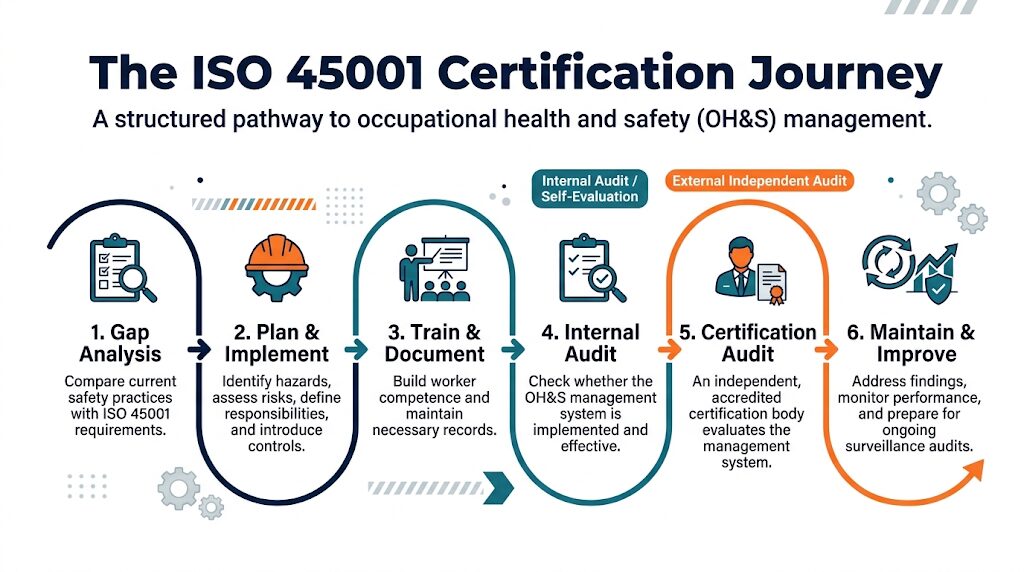
Step 1: Conduct a gap analysis. Compare existing safety practices against ISO 45001 requirements. Review risk assessments, procedures, training records, and incident reports to identify what needs improvement.
Step 2: Create an implementation plan. Set priorities, assign responsibilities, establish timelines, and allocate resources based on the organization’s risks and needs.
Step 3: Implement the management system. Introduce safety controls, train employees, document procedures, and involve workers in safety activities. Make sure the system works in daily operations, not just on paper.
Step 4: Conduct internal audits. Check whether the system meets ISO 45001 requirements and whether procedures are followed in practice. Record findings, assign corrective actions, and resolve outstanding issues before the external audit where possible. A health and safety audit helps organizations evaluate their processes, identify weaknesses, and determine what needs to improve.
Step 5: Complete the certification audit. An independent certification body generally conducts two stages:
- Stage 1: Reviews the system’s readiness, scope, and documented arrangements.
- Stage 2: Evaluates implementation through records, employee interviews, and workplace observations.
The organization must address nonconformities according to the certification body’s requirements before certification can be granted.
Implementation time depends on the organization’s size, existing safety practices, and operational complexity.
How to Prepare for an ISO 45001 Certification Audit
An audit should confirm that safety procedures work in practice, not just that documents exist.
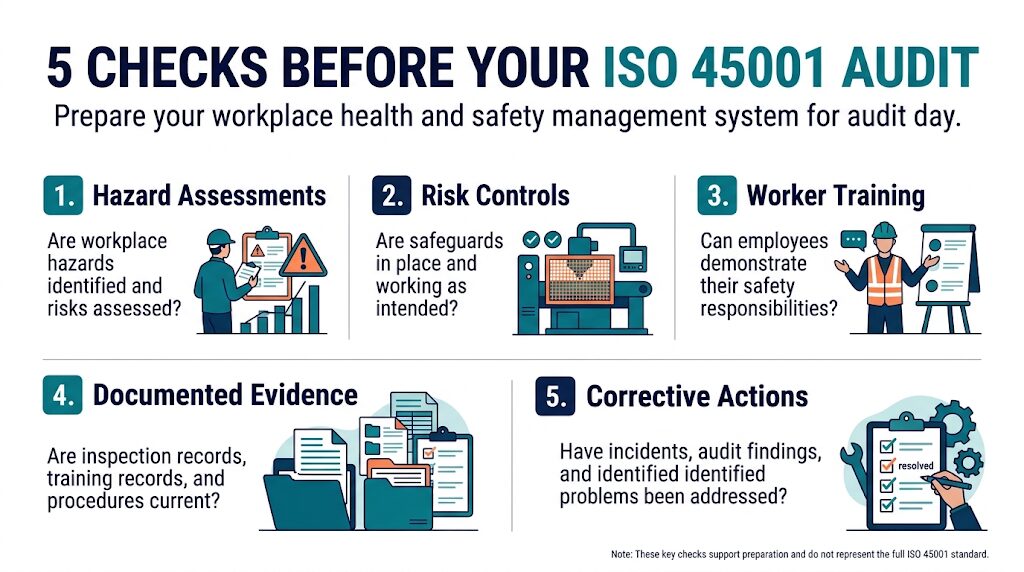
Before the audit, check that:
- Risk assessments are current and appropriate controls are in place.
- Applicable legal requirements have been identified and evaluated.
- Employee training and competency records are available.
- Operational and emergency procedures are implemented.
- Internal audits and management reviews have been completed.
- Incidents have been investigated and corrective actions tracked.
Employees should understand the procedures relevant to their jobs and know how to report hazards. Preparing for an ISO 45001 audit using a QMS can help organizations connect existing management system processes with audit preparation.
How Much Does ISO 45001 Certification Cost?
There is no fixed price for ISO 45001 certification. Costs depend on the organization’s size, number of sites, operational complexity, existing safety practices, and the certification body’s fees.
Budget for implementation support, training, internal audits, external certification audits, and ongoing surveillance. Additional costs may arise if existing safety controls or processes need significant improvement.
Request quotations based on your organization’s certification scope and allow enough time to implement and evaluate the system before the external audit.
How Can Software Support ISO 45001 Compliance?
Managing safety procedures, training records, audit findings, and corrective actions across spreadsheets and email can make it difficult to track progress or find current information.
A digital quality management system can help organize these activities.
QISS QMS offers document control, audit management, CAPA, training management, and risk management capabilities that can support relevant OH&S processes, depending on the organization’s configuration and requirements.
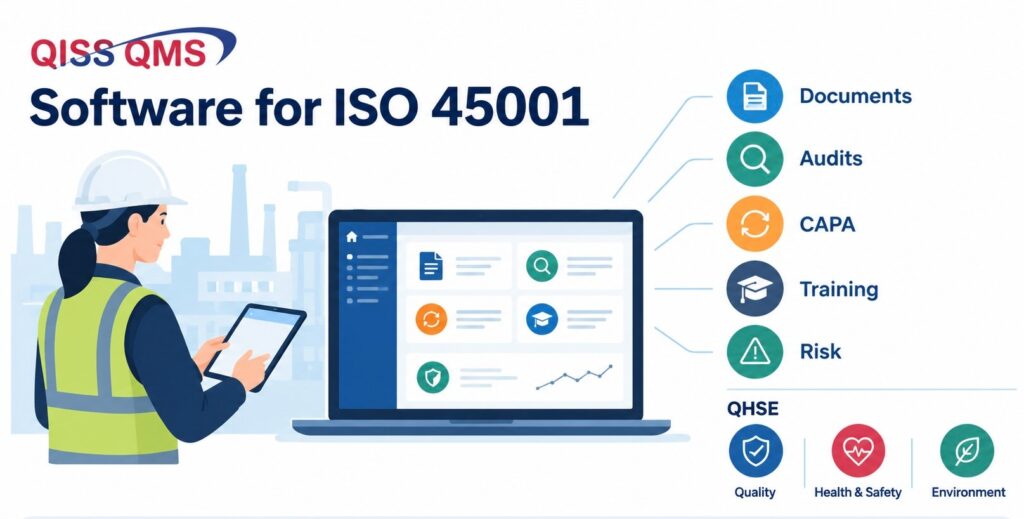
A QHSE management software solution can help organizations coordinate quality, health, safety, and environmental activities while keeping records and actions organized.
Software supports the management system; it does not replace effective safety controls, employee participation, or management commitment.
How to Maintain ISO 45001 Certification
Certification is not a one-time achievement. Organizations must continue operating and improving their OH&S management system.
To maintain certification:
- Review risk assessments when working conditions or processes change.
- Keep training records and procedures up to date.
- Investigate incidents and near misses.
- Verify that corrective actions are effective.
- Conduct internal audits and management reviews.
- Involve employees in identifying and addressing hazards.
Certification bodies generally conduct periodic surveillance audits, with recertification typically taking place every three years.
Make Workplace Safety Part of Everyday Work
ISO 45001 certification gives organizations a structured approach to identifying hazards, controlling risks, and improving occupational health and safety. Its real value comes from applying the requirements consistently, not simply passing an audit.
For organizations managing documentation, training, audits, and corrective actions, digital tools can make these processes easier to coordinate.
Ready to strengthen your management system? Request a free QISS QMS demo to explore how digital tools can support your organization’s quality and compliance processes.
Related Articles
- The Importance of a Health and Safety Management System
- What Is Health and Safety Management?
- What Is ISO 45001 and How It Fits into a Quality Management System?
- What Is the Difference Between ISO 45001 and ISO 9001?
- Implementing a Health & Safety Management System During Rapid Organizational Growth