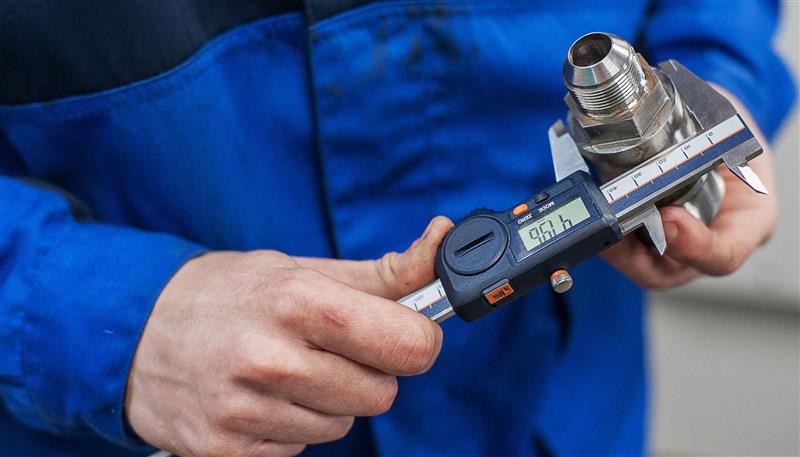
Calibration hardly fails in obvious ways. More often, it drifts — intervals stretch, records fragment, instruments fall out of scope — until a deviation, audit finding, or product issue forces attention.
This is why calibration management deserves more structure than a spreadsheet and a recurring reminder. It sits directly at the intersection of product quality, regulatory compliance, and operational reliability.
With the global calibration services market projected to reach $9.4 billion by 2032, growing at a CAGR of 4.3%, it is clear that precision and traceability are no longer peripheral concerns but are now core business requirements. (Source: IMARC – Calibration Services Market Report)
For organisations asking how to manage equipment calibration in a controlled and scalable way, the answer lies in disciplined execution across a set of well-defined practices.
Why Calibration Management Deserves More Than a Spreadsheet
At a surface level, calibration tracking appears straightforward: maintain a list of instruments, assign due dates, and record results.
In practice, this approach breaks down quickly.
Spreadsheets do not enforce consistency. They cannot adapt intervals based on performance, ensure traceability to recognized standards, or maintain reliable version control over records. As instrument counts grow, so does the risk of missed calibrations, incomplete documentation, and limited visibility into system-wide performance.
ISO 9001:2015 addresses this directly. Under Clause 7.1.5, organisations are required to control monitoring and measuring resources, ensuring calibration is performed at defined intervals and traceable to recognized standards (see ISO standard ISO 9001:2015 Clause 7.1.5).
10 Best Practices for Effective Calibration Management
1. Complete Instrument Visibility
Every calibration programme begins with knowing exactly what needs to be controlled.
A complete instrument inventory is more than a list; it is a structured record of all measuring equipment, including identification, location, ownership, and calibration status. Without this foundation, gaps are inevitable. Instruments fall outside the system, and once that happens, control is lost.
2. Risk-Based Classification
Not all instruments require the same level of oversight.
Classifying equipment based on risk and criticality allows organisations to focus effort where it matters most. Instruments tied directly to product quality or regulatory compliance demand tighter control than those used for general or low-impact measurements. This classification becomes the basis for how frequently and how rigorously each instrument is calibrated.
3. Data-Driven Calibration Intervals
Many organisations rely on fixed calibration cycles, often based on habit rather than evidence.
A more effective approach is to adjust intervals based on actual performance. Historical data, drift trends, and usage patterns provide a clearer picture of how often calibration is truly required. One practical benchmark is out-of-tolerance (OOT) performance. Industry guidance suggests keeping repeat OOT rates below 5% for any instrument family.(Source: FDA Guidance). Exceeding this threshold is a clear signal that intervals should be shortened or instruments reassessed.
This is where calibration schedule management shifts from routine scheduling to informed decision-making.
4. Traceability to Recognized Standards
Calibration without traceability is difficult to defend.
ISO 9001 explicitly requires that measurements be traceable to recognized national or international standards (see ISO 11381:2016). This ensures consistency, comparability, and audit readiness across all calibration activities. It also aligns closely with frameworks such as ISO/IEC 17025:2017, which define the technical requirements for calibration competence, including measurement uncertainty and traceability.
Traceability is what gives calibration its credibility.
5. Standardized Calibration Procedures
Consistency in execution is just as important as accuracy.
Standard Operating Procedures (SOPs) ensure that calibration is performed the same way each time, regardless of who conducts it. They define methods, acceptance criteria, and required conditions, reducing variability and making deviations easier to identify.
Without standardization, calibration becomes dependent on individual interpretation, which introduces risk.
6. Automated Scheduling
As the number of instruments increases, manual scheduling becomes unreliable.
Automation introduces discipline into calibration schedule management. Systems can trigger reminders, flag overdue calibrations, and adjust schedules dynamically as intervals change. This reduces the likelihood of missed calibrations and removes dependence on manual tracking.
7. Robust Calibration Records
Calibration is only as strong as its documentation.
Effective calibration records management requires more than storing results. Records should clearly show what was calibrated, how it was calibrated, what standards were used, and what the outcome was. They should be complete, consistent, and easy to retrieve.
In many audits, deficiencies are not found in the calibration itself, but in how it is documented.
8. Controlled Calibration Environments
Measurement conditions matter.
Temperature, humidity, and environmental stability can significantly affect calibration accuracy. For sensitive instruments, these variables must be monitored and controlled. Without this, even well-executed procedures can produce unreliable results.
Environmental control is often overlooked, but it plays a critical role in measurement integrity.
9. Competent Calibration Personnel
Calibration is a technical process that depends on skill and understanding.
Personnel must be trained not only in procedures, but also in the principles behind them. This includes equipment handling, measurement techniques, and result interpretation. Competence should be regularly assessed to ensure consistency and reliability.
A well-defined process cannot compensate for inadequate execution.
10. Integration with the QMS
Calibration should not operate in isolation from the rest of the quality system.
When integrated into the QMS, calibration data becomes part of a larger feedback loop. Out-of-tolerance results can trigger corrective actions, audit findings can be tracked systematically, and performance trends can be analysed across the organisation.
This integration also simplifies alignment with standards such as ISO 9001 and ISO/IEC 17025:2017, ensuring that calibration supports broader compliance objectives.
How Calibration Management Software Makes This Easier
As calibration programmes grow in scope, maintaining control through manual systems becomes increasingly difficult.
This is where calibration tracking software provides a clear advantage. It centralises instrument data, automates scheduling, enforces standardised workflows, and ensures that records are complete and traceable.
Platforms like QISS QMS extend this further by integrating calibration with audit management, CAPA processes, and compliance tracking. The result is a more cohesive system where calibration is not treated as a standalone activity, but as part of a controlled and connected quality framework.
Conclusion
Effective calibration management best practices are less about adding steps and more about removing uncertainty.
When calibration is managed through disconnected tools and fixed routines, organisations tend to focus on whether tasks are completed. When it is structured around data, risk, and integration, the focus shifts to whether the system is performing as intended.
That shift is what defines a mature calibration programme.
It ensures that measurements are reliable, records are defensible, and issues are identified before they escalate. In that context, compliance is not something to prepare for — it is simply the outcome of a system that is already under control.
If your calibration processes are still managed across spreadsheets and disconnected records, it becomes increasingly difficult to maintain consistency, traceability, and audit readiness at scale. QISS QMS provides a structured approach to calibration management — centralising instrument tracking, automating schedules, and ensuring every calibration record is complete, traceable, and aligned with compliance requirements. It is designed to help organisations move from reactive calibration control to a system that is consistently audit-ready and operationally reliable.