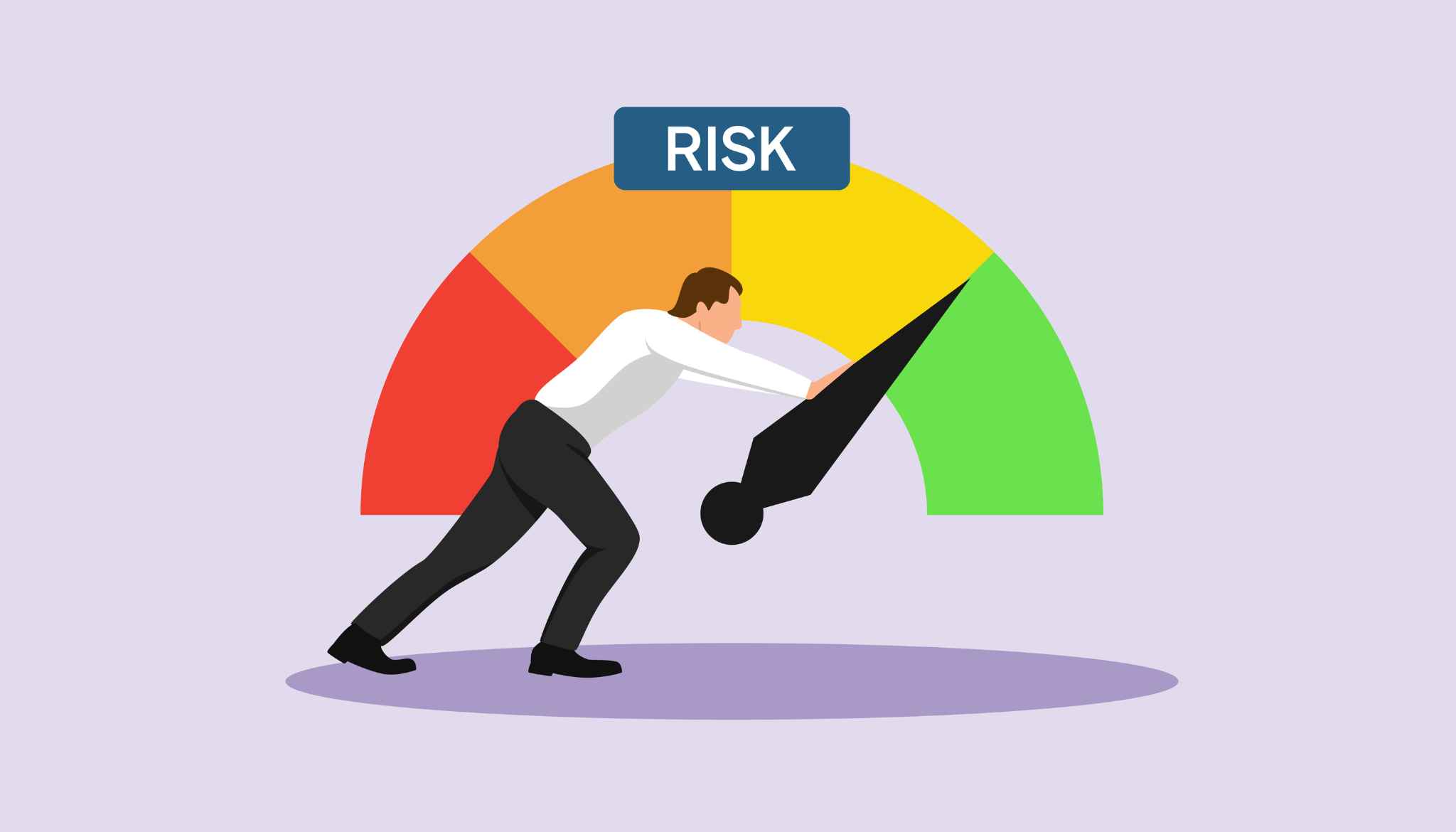
Every organization, no matter how established or well run, operates under uncertainty. Machines break down. Suppliers miss deadlines. Regulations shift. Employees make mistakes. Markets behave in unexpected ways. None of this is unusual. What is unusual is how differently organizations respond to these realities.
Some deal with problems only after damage has already been done. Others make a deliberate effort to anticipate trouble, limit exposure, and stay in control when conditions change. The difference between the two is not luck. It is a disciplined approach to risk management.
Risk management is not a theoretical exercise and it is not a compliance ritual. At its best, it is a practical way of thinking about how the business really works, where it is vulnerable, and what can be done- sensibly and proportionately- to protect it.
What “Risk” Really Means in Business
In business terms, a risk is anything that could interfere with achieving an objective. That objective might be delivering a product on time, meeting a regulatory requirement, protecting sensitive data, maintaining cash flow, or preserving customer trust.
Some risks are obvious. A single-source supplier creates dependency. An outdated IT system creates security exposure. Poorly trained staff create quality problems. Other risks are less visible: informal processes that only one person understands, undocumented decisions, or growth that outpaces internal controls.
Not all risks are dramatic or catastrophic. Many are routine and operational. Yet these everyday risks are often the ones that quietly erode performance, margins, and credibility.
Managing risk is not about eliminating uncertainty. That is neither realistic nor necessary. It is about understanding what could go wrong, deciding what level of exposure is acceptable, and acting before problems escalate.
Step 1: Identifying Risks
Risk management begins with a simple but uncomfortable question: What could go wrong here?
This step is frequently underestimated. Teams tend to focus on risks they already recognize and ignore those that sit outside their immediate responsibilities. The result is a narrow, incomplete view of exposure.
Effective risk identification requires looking at the business from multiple angles:
- How do key processes actually operate day to day?
- Where do handovers, dependencies, or bottlenecks exist?
- Which activities rely on individual knowledge rather than documented procedures?
- Where have things failed or nearly failed in the past?
Useful inputs include:
- Past incidents, customer complaints, audit findings, and warranty claims
- Regulatory and contractual obligations
- Supplier performance records
- Staff workshops and cross-functional reviews
- Industry alerts and competitor failures
The aim is to build a working list of risks across areas such as operations, compliance, finance, IT, quality, health and safety, and reputation.
At this stage, precision is less important than coverage. It is better to capture a long list and refine it later than to overlook a serious exposure entirely.
Step 2: Analyzing Likelihood and Impact
Once risks are listed, the next task is to understand which ones deserve attention first.
This is done by asking two practical questions:
- How likely is this to happen?
- If it does happen, how bad would the consequences be?
A supplier delay that happens twice a year but causes only minor inconvenience is very different from a data breach that might occur once a decade but could shut the business down.
Most organizations use a simple scoring approach- low, medium, high, or a 1–5 scale—for both likelihood and impact. The purpose is not mathematical accuracy. It is structured judgment.
This step forces uncomfortable clarity. Teams must stop treating all risks as equal and start admitting that some problems, while irritating, are not strategically important.
In some cases, a third factor is also considered: how early the risk can be detected. A problem that can be spotted and corrected quickly is far less dangerous than one that remains invisible until damage is done.
That’s why our risk assessment module takes into account how often an event occurs, its consequences, and how difficult it is to detect to decide if it is a high, medium or low risk.
Step 3: Evaluating What Matters Most
Risk evaluation is where analysis turns into priorities.
Here, each risk is compared against what the organization is realistically willing to tolerate. That tolerance is shaped by leadership judgment, regulatory expectations, industry norms, financial strength, and reputation sensitivity.
The outcome is usually a simple classification:
- Risks that require immediate action
- Risks that require planned treatment
- Risks that can be accepted and monitored
This step matters because resources are limited. Time, money, and management attention cannot be spent everywhere at once.
Without explicit prioritization, organizations fall into one of two traps: obsessing over minor issues while ignoring major threats, or attempting to fix everything and achieving very little.
Step 4: Deciding How to Respond
Once priorities are clear, the organization must decide what to do about each significant risk.
There are four basic response options.
1. Avoid the Risk
This means changing plans or activities so that the risk no longer exists. For example, discontinuing a product that creates unacceptable liability or exiting a market with unstable regulation.
Avoidance is effective but often expensive. It is usually reserved for risks that are both severe and fundamentally unacceptable.
2. Reduce the Risk
This is the most common approach. Controls are introduced to lower either the likelihood of the risk occurring or the damage it would cause.
Examples include:
- Preventive maintenance to reduce equipment failure
- Quality checks to catch defects early
- Staff training to reduce human error
- Access controls to limit data breaches
Good mitigation is practical. It fits into normal operations rather than existing as a separate bureaucratic layer.
3. Transfer the Risk
Some risks are shifted to third parties through insurance, outsourcing, or contractual terms.
This does not eliminate risk. It redistributes financial or legal consequences. It can be sensible, but it should never be confused with control.
4. Accept the Risk
Some risks are simply tolerated. They may be too minor to justify action or too costly to control.
Acceptance should always be a conscious decision, recorded and reviewed. Ignoring a risk is not the same as accepting it.
Step 5: Turning Decisions into Action
Risk treatment only becomes real when it is translated into specific actions.
That means:
- Defining concrete control measures
- Assigning named owners
- Setting deadlines
- Allocating resources
- Deciding how success will be measured
For example, if the risk is incomplete regulatory documentation, the response might include standardized templates, a document control system, staff training, and periodic internal audits.
Without accountability and follow-through, even the best risk plans collapse into paperwork.
Step 6: Monitoring and Adjusting
Risk management is not a one-time project.
Controls weaken. Businesses change. New risks appear.
Ongoing monitoring ensures that:
- Existing controls still work
- Risk levels have not increased silently
- New threats are identified early
This is done through management reviews, internal audits, incident reports, key risk indicators, and regulatory scanning.
Review cycles allow organizations to update priorities based on what is actually happening, not what was assumed a year earlier.
Step 7: Creating a Risk-Aware Culture
No framework works if people treat it as a box-ticking exercise.
A healthy risk culture encourages employees to raise concerns, report near-misses, and question unsafe shortcuts.
Leadership behavior is decisive here. When managers take risk seriously, invest in controls, and respond constructively to bad news, others follow.
When risk is punished, hidden, or ignored, it grows quietly.
Conclusion
Fear or pessimism have no place in the risk management process. It’s about practicality.
It compels businesses to face how their operations truly function, where they are exposed, and what can be done- reasonably and proportionately- to maintain control.
When done correctly, it improves decision-making, maintains operational stability, safeguards reputation, and fosters long-term confidence.
Organizations that shun uncertainty are not the ones who manage risk the best. They are the ones who confront it early, give it careful thought, and take action before it escalates into a crisis.
Strengthen your risk management process with QISS QMS– a smarter way to identify, assess, and control risks before they turn into operational or compliance failures.