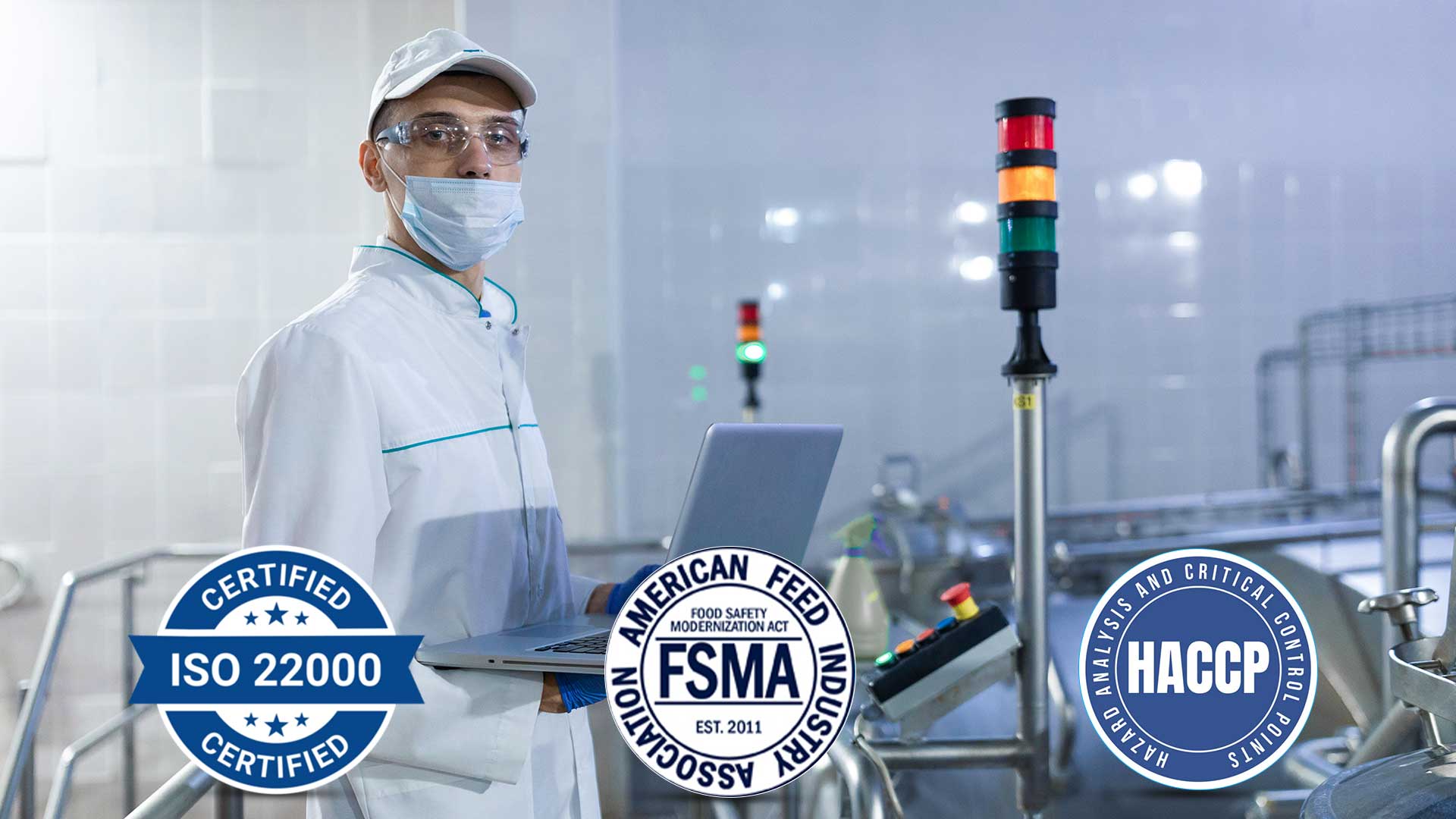
Quality is inextricably linked to safety and compliance in the modern global food sector. Recalls, legal action, and years-long reputational harm can result from a single error in testing, traceability, or documentation. Food makers work under strict regulations to avoid such results, most notably the U.S. Food Safety Modernization Act (FSMA), ISO 22000 (Food Safety Management Systems), and HACCP (Hazard Analysis and Critical Control Points).
Although eliminating foodborne hazards through proactive management is the unifying purpose of these standards, it can be difficult to maintain compliance across intricate production lines and international supply chains. A Laboratory Information Management System (LIMS) is extremely helpful in this situation. By consolidating testing, documentation, and traceability onto a single digital platform, a properly deployed LIMS helps producers lower mistake rates and fortify each link in the food safety chain.
Understanding the Regulatory Framework
Before exploring how LIMS contributes to compliance, it’s essential to understand what each framework requires.
1. HACCP (Hazard Analysis and Critical Control Points)
HACCP is a preventive system designed to identify and control biological, chemical, and physical hazards in food production. It mandates seven key principles, including hazard analysis, identification of critical control points (CCPs), monitoring procedures, corrective actions, and record-keeping.
2. ISO 22000 (Food Safety Management Systems)
ISO 22000 builds on HACCP principles but integrates them into a broader management system that encompasses the entire food supply chain. It requires risk-based thinking, communication across stakeholders, continual improvement, and documentation to demonstrate the effective operation of food safety controls.
3. FSMA (Food Safety Modernization Act)
FSMA, enforced by the U.S. FDA, shifts the focus of food safety from reactive to preventive measures. It emphasizes hazard analysis, preventive controls, supplier verification, and mandatory documentation to prove compliance. FSMA also requires rapid traceability and corrective action in the event of contamination or recall.
Collectively, these frameworks demand rigorous testing, precise documentation, consistent monitoring, and verifiable traceability — all of which are strengths of a LIMS.
The Role of LIMS in Food Safety and Compliance
A Laboratory Information Management System centralizes and automates laboratory operations, connecting sample management, testing workflows, instrument data, and reporting into a cohesive digital ecosystem. In food manufacturing, where dozens of samples are collected daily from ingredients, processing equipment, water sources, and finished goods, manual record-keeping quickly becomes unsustainable.
By digitizing every stage of laboratory testing and quality control, a LIMS helps ensure that safety data is reliable, traceable, and audit-ready.
1. Centralized Sample Management and Traceability
LIMS assigns unique identifiers or barcodes to every sample — whether it’s a raw ingredient, an environmental swab, or a finished product. This digital trace links the sample to its batch, supplier, and production line, ensuring complete visibility from intake to distribution.
During audits or investigations, traceability is critical. Regulators may request documentation to prove when and how a specific lot was tested, who performed the analysis, and what corrective actions were taken. With LIMS, this information can be retrieved instantly, eliminating the need to search through paper records or spreadsheets.
This traceability is also crucial for FSMA’s Recordkeeping and Traceability Rule, which requires rapid retrieval of data to facilitate timely recall actions if contamination occurs.
2. Automated Data Capture and Error Reduction
Food testing involves multiple parameters — microbiological counts, allergen screening, moisture levels, pH, temperature, and more — often performed on different instruments. A LIMS can directly integrate with analytical instruments, automatically importing test results into the system without manual transcription.
This automation reduces data-entry errors and ensures that all results are time-stamped, linked to the correct sample, and immediately available for review. By maintaining an unalterable digital record, LIMS supports data integrity principles outlined in ISO 22000 and FDA guidelines.
Moreover, automatic result comparison against defined specifications allows early detection of out-of-limit results, helping teams take corrective action before non-compliant products reach consumers.
3. Supporting HACCP Implementation and Monitoring
The effectiveness of a HACCP plan relies on precise monitoring of Critical Control Points (CCPs) — such as temperature in pasteurization, pH during fermentation, or metal detection in packaging. LIMS helps in documenting and tracking these parameters systematically.
- Real-time data entry: Field or line operators can enter CCP readings directly into the LIMS.
- Alerts and notifications: Automatic alerts are triggered when values deviate from critical limits.
- Corrective action tracking: Each deviation can be linked to a corrective action record for accountability and follow-up.
This structured monitoring supports HACCP principles 4 (Monitoring), 5 (Corrective Actions), and 7 (Record-Keeping), ensuring that data is both consistent and verifiable.
4. Quality Documentation and Audit Readiness
Compliance audits under ISO 22000 or FSMA demand thorough documentation of procedures, results, and change histories. LIMS automatically maintains:
- Time-stamped audit trails showing who performed each action
- Electronic signatures for approvals and verifications
- Version-controlled documents for SOPs, methods, and forms
This eliminates the burden of maintaining binders or scattered spreadsheets. When inspectors or certification bodies request evidence, LIMS enables rapid retrieval of validated records, demonstrating transparency and control.
By maintaining documentation in a secure, tamper-proof format, a LIMS supports 21 CFR Part 11 requirements for electronic records and signatures — another key component of regulatory compliance.
5. Supplier and Ingredient Verification
Under FSMA’s Preventive Controls for Human Food rule, food manufacturers are required to verify that their suppliers meet safety standards. LIMS simplifies this by managing supplier profiles, tracking incoming ingredient test results, and flagging non-conformances automatically.
The system can generate reports showing which batches were accepted or rejected based on microbial or chemical test results, enabling proactive supplier management. This aligns with both FSMA’s verification requirements and ISO 22000’s emphasis on control of external providers.
6. Corrective and Preventive Action (CAPA) Management
Non-conformances are inevitable in any complex process, but how an organization responds defines its compliance strength. LIMS supports CAPA workflows by automatically recording incidents, assigning investigations, and linking corrective actions to affected samples or batches.
This digital trail not only resolves issues efficiently but also supports continuous improvement — a key principle of ISO 22000. Over time, CAPA data can be analyzed to identify recurring issues, helping manufacturers strengthen preventive controls.
7. Reporting, Analytics, and Continuous Improvement
LIMS generates detailed analytical and trend reports that help quality teams evaluate performance and compliance. By visualizing data across batches, facilities, or time periods, manufacturers can identify emerging risks — such as recurring contamination at a particular site or supplier — before they escalate.
This insight enables a proactive approach to food safety, aligning with the preventive mindset promoted by FSMA and ISO 22000. Continuous monitoring of performance indicators ensures that improvements are data-driven rather than reactive.
Practical Benefits Beyond Compliance
While regulatory alignment is critical, the benefits of LIMS extend well beyond meeting legal requirements:
- Reduced administrative workload: Automated data handling and digital reporting minimize manual effort.
- Faster decision-making: Real-time access to validated results accelerates release of safe products.
- Improved collaboration: Cross-functional teams can access consistent information across departments.
- Enhanced consumer confidence: Reliable data and consistent quality control reinforce brand reputation.
In essence, a LIMS transforms food safety compliance from a reactive obligation into a proactive, data-driven system of control and improvement.
The Future of Food Safety Management
As the food industry becomes increasingly globalized, the complexity of supply chains will continue to rise. Digital systems like LIMS will play an even greater role — integrating with IoT devices, blockchain traceability solutions, and AI-based predictive analytics to ensure food safety across borders and partners.
Future-ready LIMS platforms will not only document what happened but also help predict what could go wrong, giving manufacturers the tools to prevent risks before they occur.
Conclusion
Discipline, accuracy, and transparency are all necessary for HACCP, ISO 22000, and FSMA compliance. These standards need a level of accuracy and traceability that manual solutions just cannot provide.
Food manufacturers may reliably and effectively maintain compliance by using a Laboratory Information Management System, which automates data collection, centralizes records, and provides a comprehensive audit trail. It guarantees that every product that reaches the market is supported by reliable documentation, confirmed safety controls, and validated data.
LIMS is more than simply a technology; it is the foundation of accountability and compliance in a world where public trust is defined by food safety.
Are you prepared to guarantee complete compliance and optimize your laboratory processes?
To learn how QISS LAB can transform sample tracking, automate reporting, and improve data integrity throughout your operations, get a free demo now.
For a demo, get in touch with our team now!
Related Articles
- How LIMS Supports Quality Control in Refinery and Petrochemical Testing
- LIMS for Quality Assurance in Manufacturing: Reducing Errors and Rework
- The Role of LIMS in Marine ISO 17025 Accreditation
- How Can a Lab Software Helps in Sample Retention Process?
- Ultimate Guide to Lab Sample Management: Best Practices