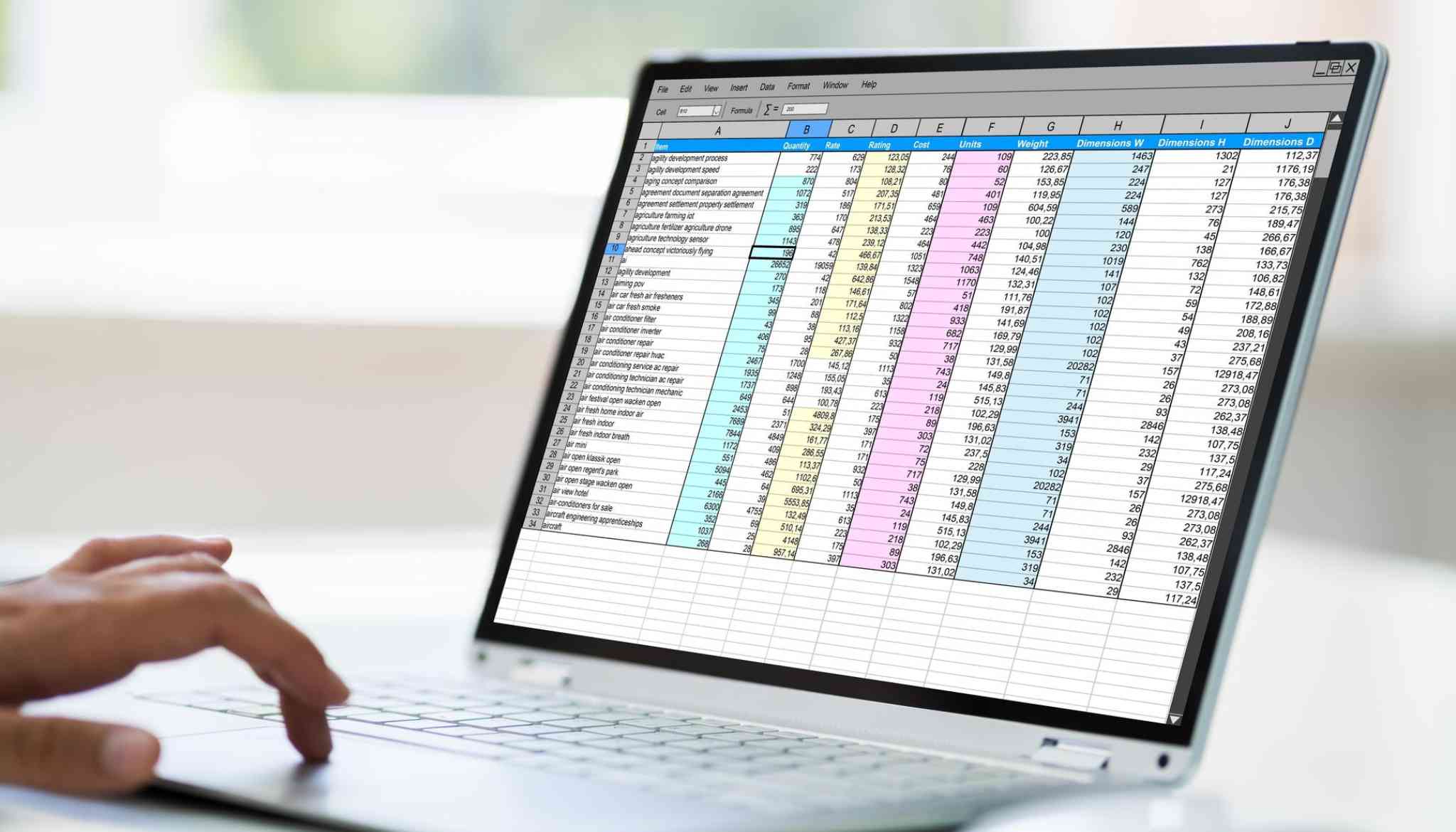
Take a look at almost any laboratory- academic, clinical, pharmaceutical, or industrial- and you will likely find spreadsheets quietly holding everything together. Sample tracking, stability data, equipment logs, reagent inventories, environmental monitoring, and deviation notes- often all managed in spreadsheets that were never designed for complex, regulated science. Spreadsheets are familiar, flexible, and deceptively powerful. That is exactly why they can become dangerous.
The risk is rarely obvious at first. It accumulates slowly alongside lab growth, increasing regulatory pressure, and growing data complexity. By the time the issues become apparent, the spreadsheet has often become a critical operational dependency.
This is not a critique of spreadsheets as tools- they are excellent for flexibility and ad hoc work, but the challenge emerges when they are used as systems of record in modern, high-volume, regulated laboratory environments.
The Illusion of Data Integrity
Spreadsheets create the appearance of structure without enforcing it. A single misplaced formula, hidden column, or overwritten cell can silently corrupt results. Version histories are often incomplete or maintained manually, and even with file-locking or cloud sharing, true audit-grade traceability is difficult to guarantee. Copy-paste errors, broken formula references after row insertion, manual instrument re-entries, or “temporary edits” that become permanent can all quietly compromise data.
In regulated environments, a single undocumented change can invalidate entire data sets, delay product release, or trigger costly investigations. The risk is not simply incorrect data — it is undetectable incorrect data that can quietly compromise compliance, product quality, and organizational credibility.
Version Control Becomes Operational Chaos
As labs grow, spreadsheets often proliferate into multiple versions with confusing names: “final_v7_REAL_final.xlsx” is a common example. Teams quickly lose track of which dataset is authoritative. Historical reconstruction becomes nearly impossible, and investigating deviations or errors takes significantly more time. Auditors may demand to know who changed a value, when it changed, why it changed, and what the previous value was. Spreadsheets were never designed to provide reliable answers to these questions.
Hidden Single Points of Failure
Spreadsheet-based workflows often rely heavily on individual knowledge. One analyst may understand how macros work, one QA reviewer may know which tabs matter, and one manager may know where the “real” file is stored. If any of these individuals are unavailable, on leave, or leave the organization, operational risk increases immediately. This is not a technology problem—it is a knowledge continuity problem.
Audit Readiness is Reactive, Not Continuous
Modern regulatory expectations emphasize continuous audit readiness. Spreadsheet-driven labs, however, typically require manual reconstruction of audit trails, cross-referencing between systems, email-based approval evidence, and screenshots to demonstrate compliance. This leads teams to “prepare for audits” instead of being audit-ready by design. The operational cost is high: lost productivity, increased stress, and higher likelihood of audit observations.
Scaling Slowly Breaks the Model
Spreadsheets fail gradually rather than catastrophically. Slower file performance, duplicate trackers, manual reconciliation, shadow spreadsheets, and extended review cycles often appear as the lab grows. Each new spreadsheet intended to solve a problem increases fragmentation and makes data relationships harder to see. Modern laboratories require connected, integrated data ecosystems, not isolated spreadsheets.
Loss of Real-Time Visibility
Spreadsheets are essentially static snapshots unless someone updates them continuously. This creates blind spots in sample lifecycle tracking, stability studies, instrument calibration, inventory management, and quality trends. Without real-time visibility, laboratories transition from proactive quality management to reactive firefighting.
Security and Access Control Gaps
Most spreadsheet security relies on file-level permissions, not data-level controls. This means users often have access to either everything or nothing, making enforcement of segregation of duties difficult. Sensitive data may be visible unintentionally, and regulatory requirements for role-based, traceable, and automatically enforced access control are hard to satisfy.
Collaboration Without Workflow Control
Shared spreadsheets give the illusion of collaboration but lack true workflow governance. They cannot enforce structured review routing, electronic signatures linked to record states, mandatory field completion, or automated escalation of overdue actions. Without workflow enforcement, deviations can occur silently, undermining data quality and regulatory compliance.
The Hidden Cost of “Free”
Spreadsheets appear inexpensive, but hidden costs accumulate. Manual data entry, investigation during deviations, audit preparation, error correction, and training new staff on undocumented spreadsheet logic all consume time and resources. When these costs are fully accounted for, spreadsheet-driven operations are often more expensive than investing in structured, validated digital systems.
Human Factors and False Confidence
Perhaps the most insidious risk is cultural. If a spreadsheet “worked yesterday,” teams assume it will work tomorrow. This creates organizational inertia, delaying recognition of systemic risks. Spreadsheet failures are rarely loud or obvious—they emerge during deviations, product complaints, or regulatory inspections, often when the lab least expects them.
Transitioning to Modern Systems
Modern labs need controlled, integrated systems that provide automated audit trails, real-time data synchronization, instrument data integration, enforced workflows, role-based access, and complete lifecycle traceability. But transition does not need to be disruptive or overwhelming.
In practice, successful modernization is phased and risk-based.
For example, consider a stability program currently managed across multiple spreadsheets. Each pull point requires manual data entry from instruments, manual status updates, and manual review tracking. During an inspection, QA must reconstruct who entered each result, whether any values were changed, and whether review occurred before reporting.
A structured digital system changes this immediately:
- Instrument data flows directly into controlled records.
- Each result is automatically time-stamped and attributed to a user.
- Review steps are enforced before data can move to “approved” status.
- Any change creates a permanent, traceable audit entry.
- Expired pull points trigger automatic notifications instead of relying on calendar reminders.
The result is not simply “better software.” It is a measurable reduction in investigation time, fewer transcription errors, and continuous audit readiness without manual reconstruction.
Most laboratories begin with their highest-risk workflows—typically sample tracking or stability management—then expand to instrument integration, inventory control, and connected quality processes. This phased approach reduces operational risk while preserving scientific autonomy.
Modernization succeeds when it strengthens control without slowing science.
Conclusion
Spreadsheets are not inherently dangerous. They are still excellent for analysis, modeling, and flexible tracking. The real risk arises when they become systems of record for regulated, high-volume laboratory data. Modern laboratories are tasked with operating faster, maintaining continuous compliance, and preserving full data lineage across complex workflows. Spreadsheets were never designed to support these responsibilities. The hidden danger is not that spreadsheets will fail- it is that they will appear to work perfectly, right up to the moment the lab requires provable accuracy.
For labs ready to reduce hidden risks and improve data reliability, QISS LAB offers a modern alternative to spreadsheets. Contact us to learn more.